Discover Unique Australian Names for Your Baby
Traditional, Indigenous, and Modern Australian Baby Names for Your Little Koala
Aussie Favourites Through the Years
From timeless classics to modern all-rounders – these are Australia’s most-chosen baby names since records began.
Latest stories
How to Choose a Baby Name That Works in Australian English
Sept. 15, 2026
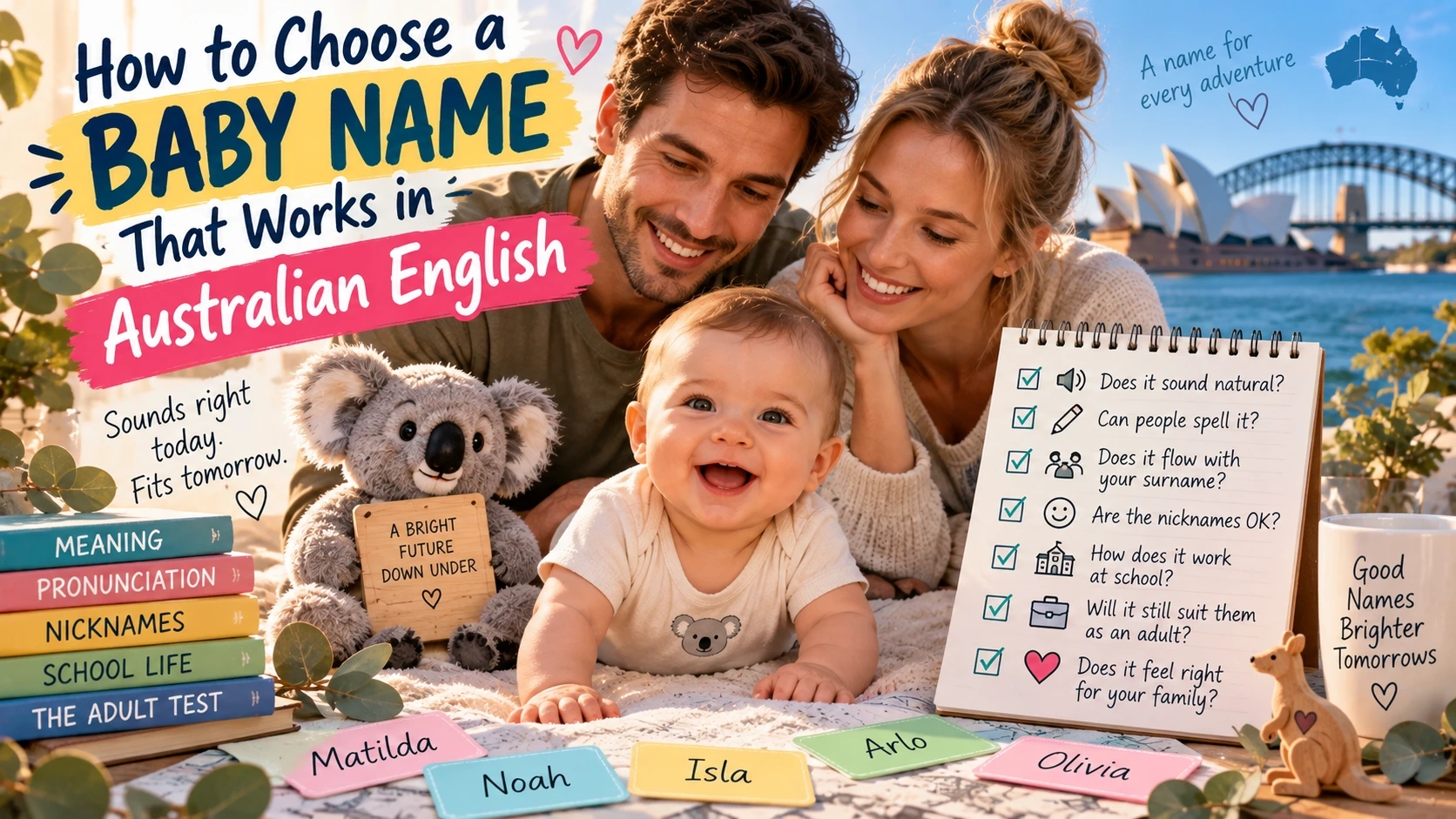
Quick answer
To choose a baby name that works in Australian English, test how it sounds, how someone spells it after hearing it, and how it flows with your surname. Then try likely nicknames, a school roll call and an adult introduction. Look for practical issues you can explain or comfortably accept—not a name that nobody will ever mispronounce. A name can retain its cultural identity and still …
Baby Name Trends in Australia 2026: What Parents Are Choosing Now
May 2, 2026
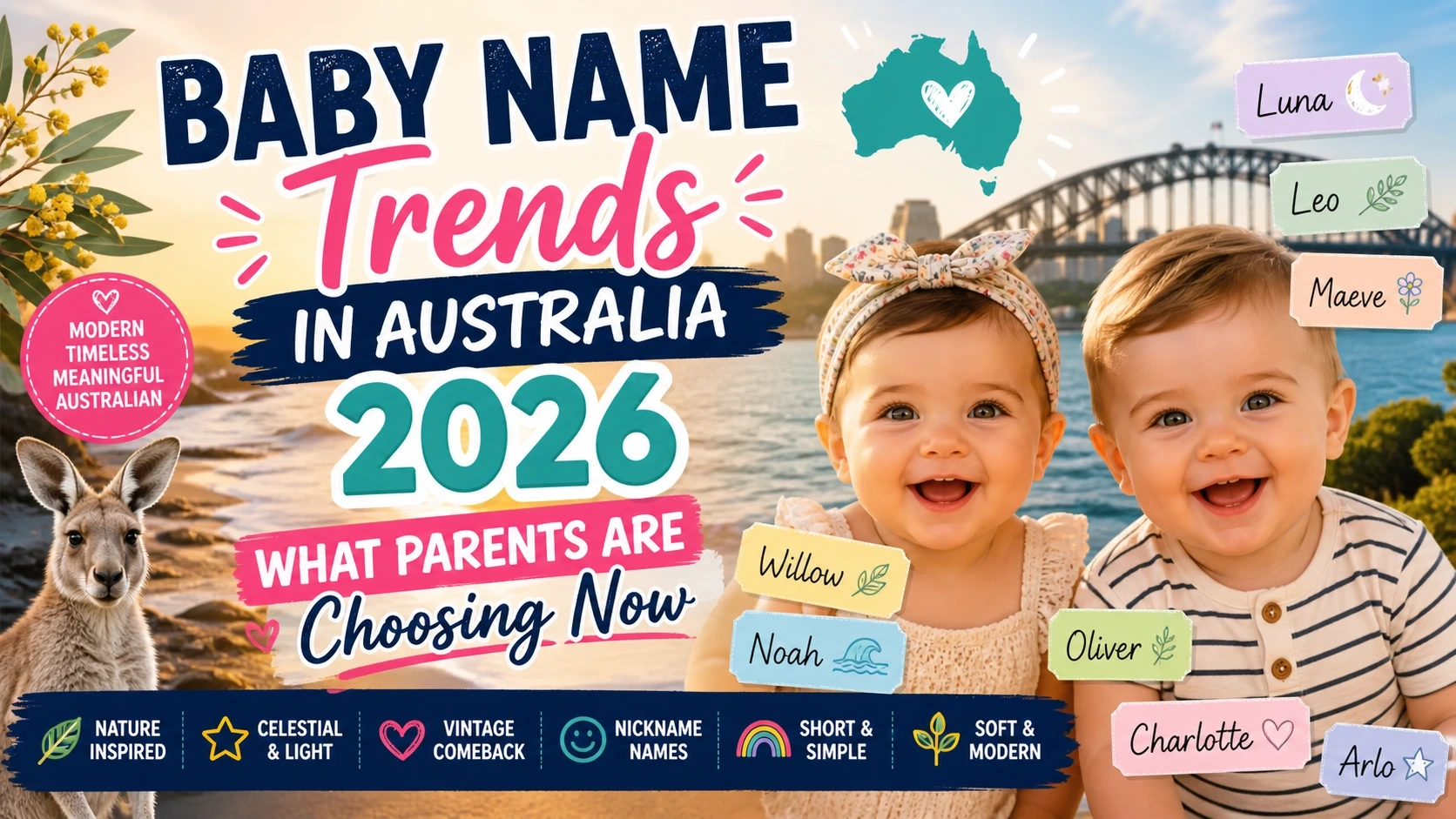
Choosing a baby name in Australia has become less about finding one single “perfect” name and more about finding the right feeling.
In 2026, Australian parents are still drawn to familiar favourites, but the mood around names is changing. Classic names remain strong, vintage names are coming back, nickname-style names feel more natural, and nature-inspired choices continue to fit the Australian lifestyle.
The latest national and state-level …
World Naming News Digest: 5 Stories That Shaped the Conversation in March–April 2026
April 14, 2026
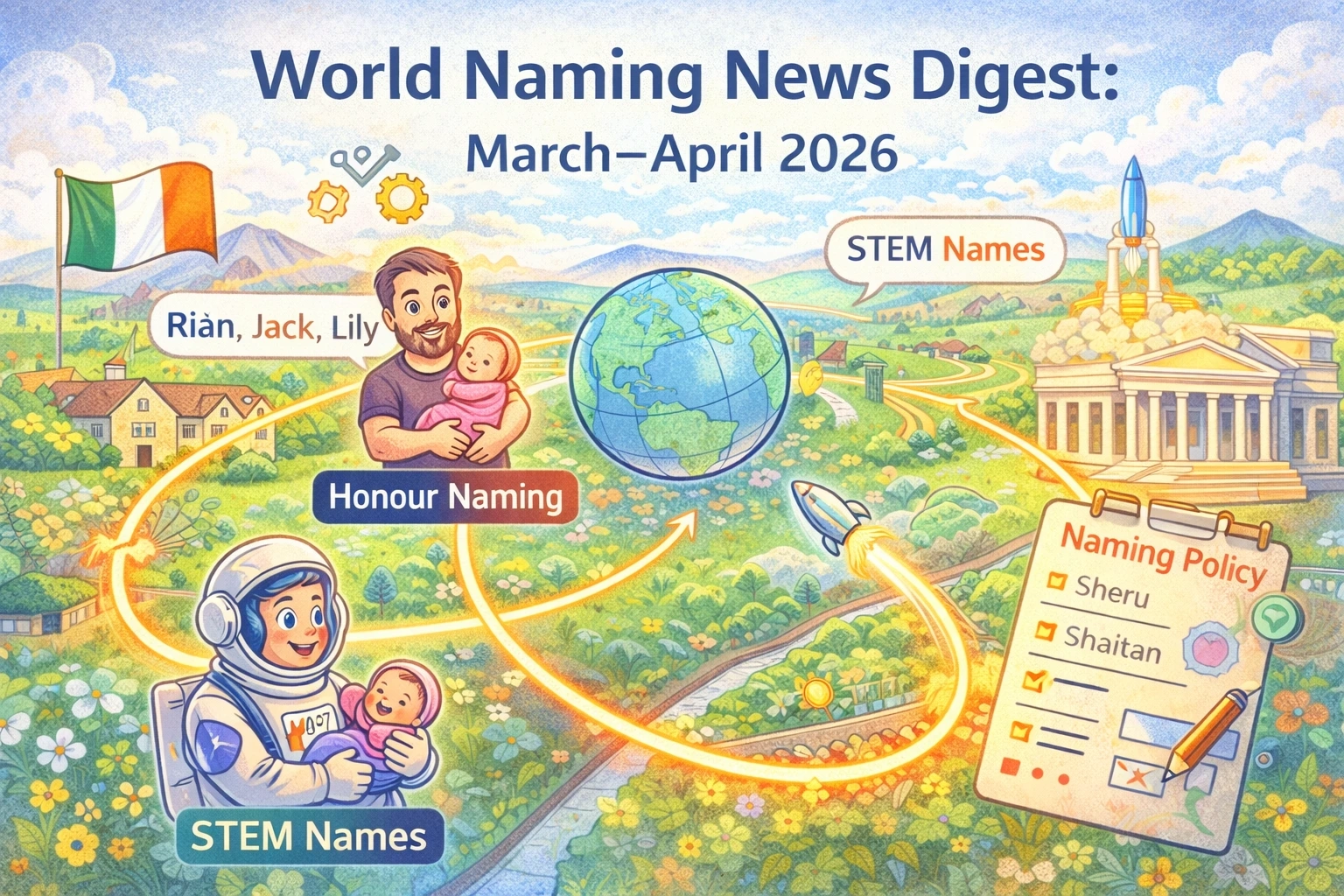
March and April 2026 did not produce one single giant baby-name story.What they produced instead was something more interesting: five very different naming stories that, together, showed where the global conversation is moving.
Across official data releases, celebrity birth announcements and policy debates, names kept returning to the same themes:
- identity
- meaning
- memory
- social usability
- public interpretation
That matters because naming culture is no …
How to Choose an Uncommon Name That Still Feels Easy to Live Withю
April 3, 2026
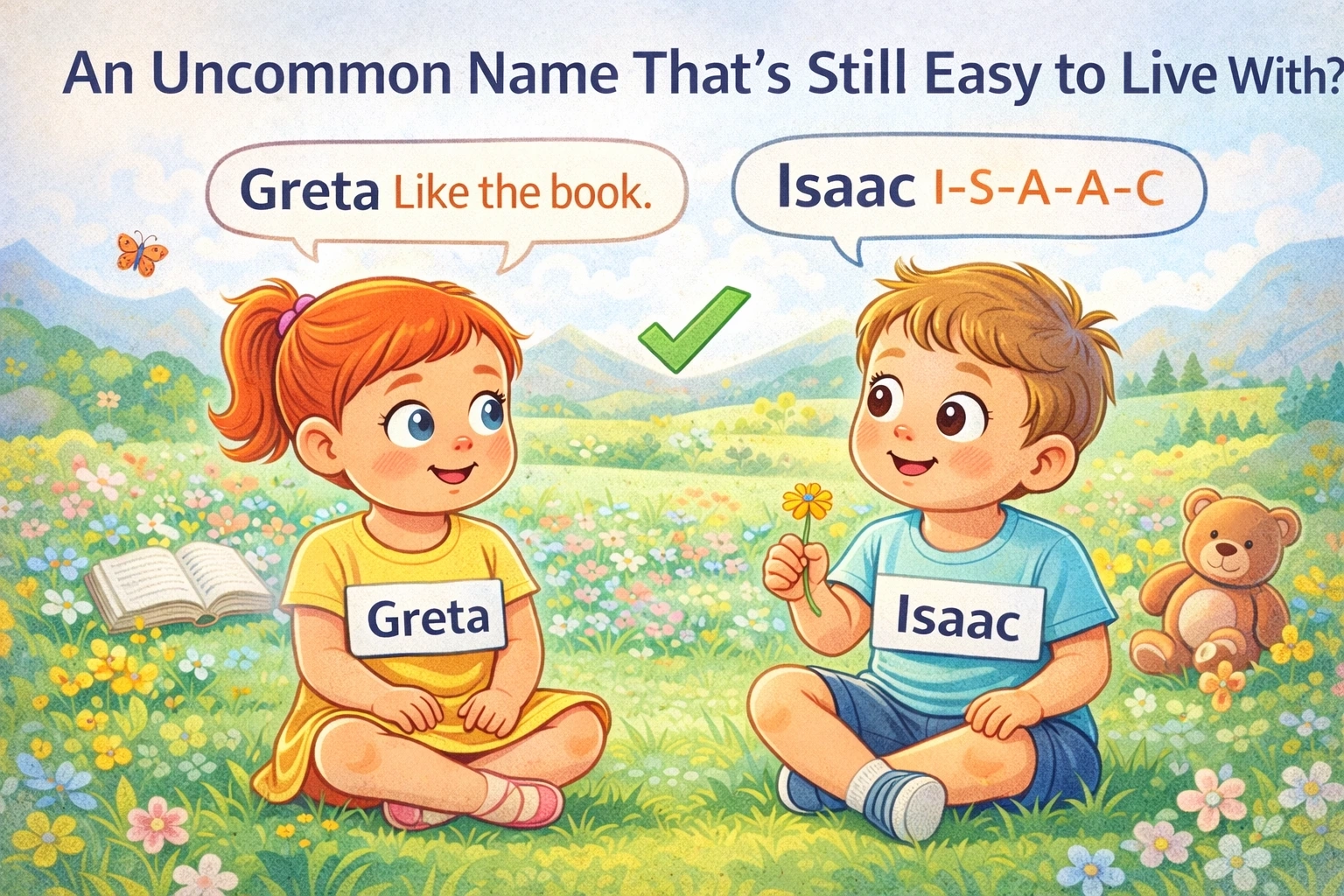
Many parents want the same thing, even if they describe it differently.
They do not want the most popular name in the country.But they also do not want a name that creates friction every week of their child’s life.
In other words, they are looking for a very specific middle ground:
uncommon, but usable
A name that feels fresh, but not forced.Distinct, but not difficult.Recognisable, …
Will My Child Share Their Name at School? A Simple Guide to Name Collision Risk in Australia
March 12, 2026
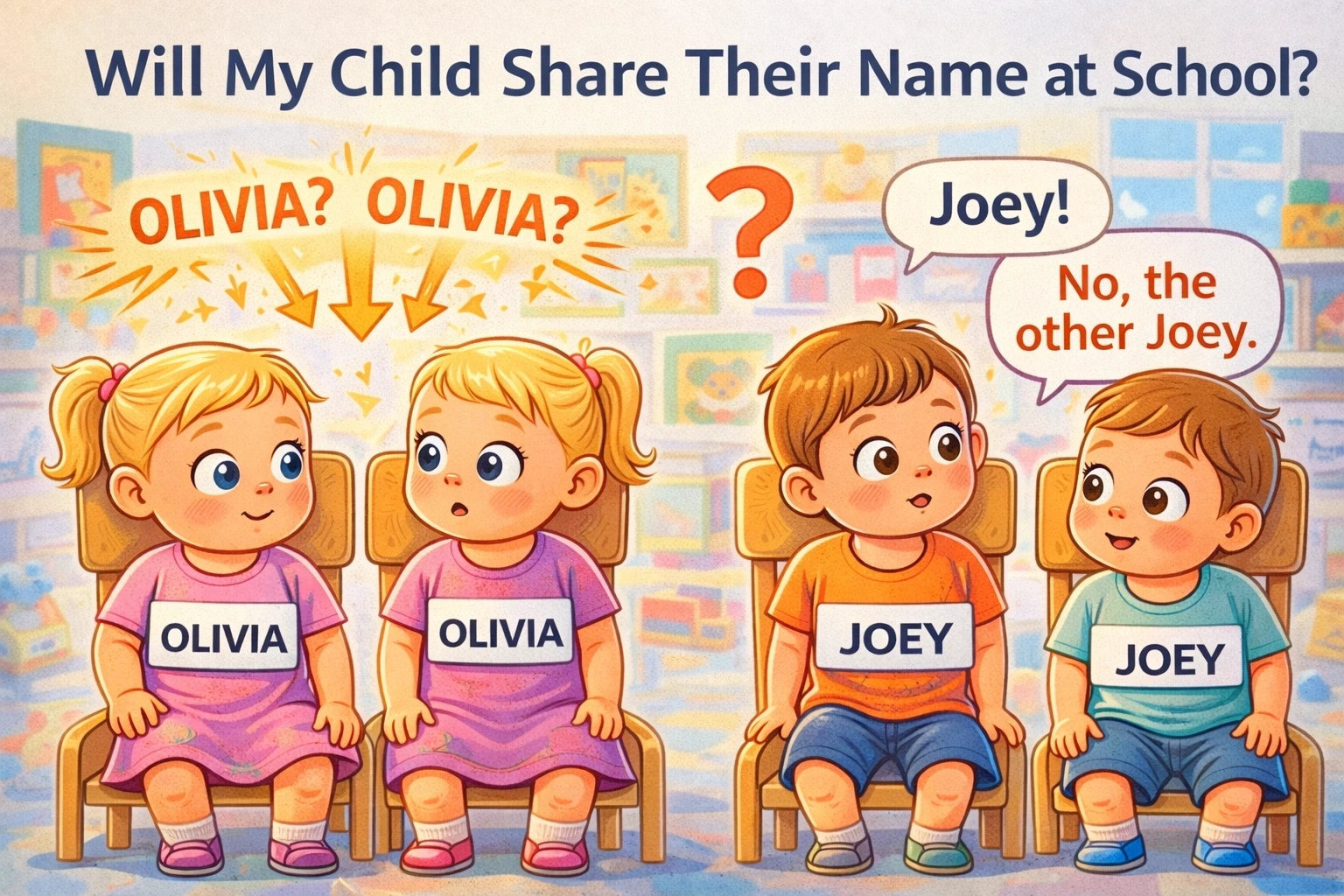
Most parents do not mind if a name is liked by other people.
What they mind is something more specific:
repetition in real life.
Not “popular” in the abstract. Not “Top 100” on a chart.
But the moment when a parent calls one child at daycare and three heads turn.
That is what this article is about.
If you are trying to avoid …
Nickname Collisions: Why “Different” Baby Names Still Turn Into the Same Classroom Name
Feb. 24, 2026

Parents often choose a longer, “more formal” name because it feels safer:
- more options later,
- more adult on a resume,
- less trendy than the short version.
But in Australia, there’s a predictable twist:
Many different legal names collapse into the same everyday nickname.
So on paper, your child might be a Theodore, a Theo, a Thea or a Matteo — but in real …