How to Choose an Uncommon Name That Still Feels Easy to Live Withю
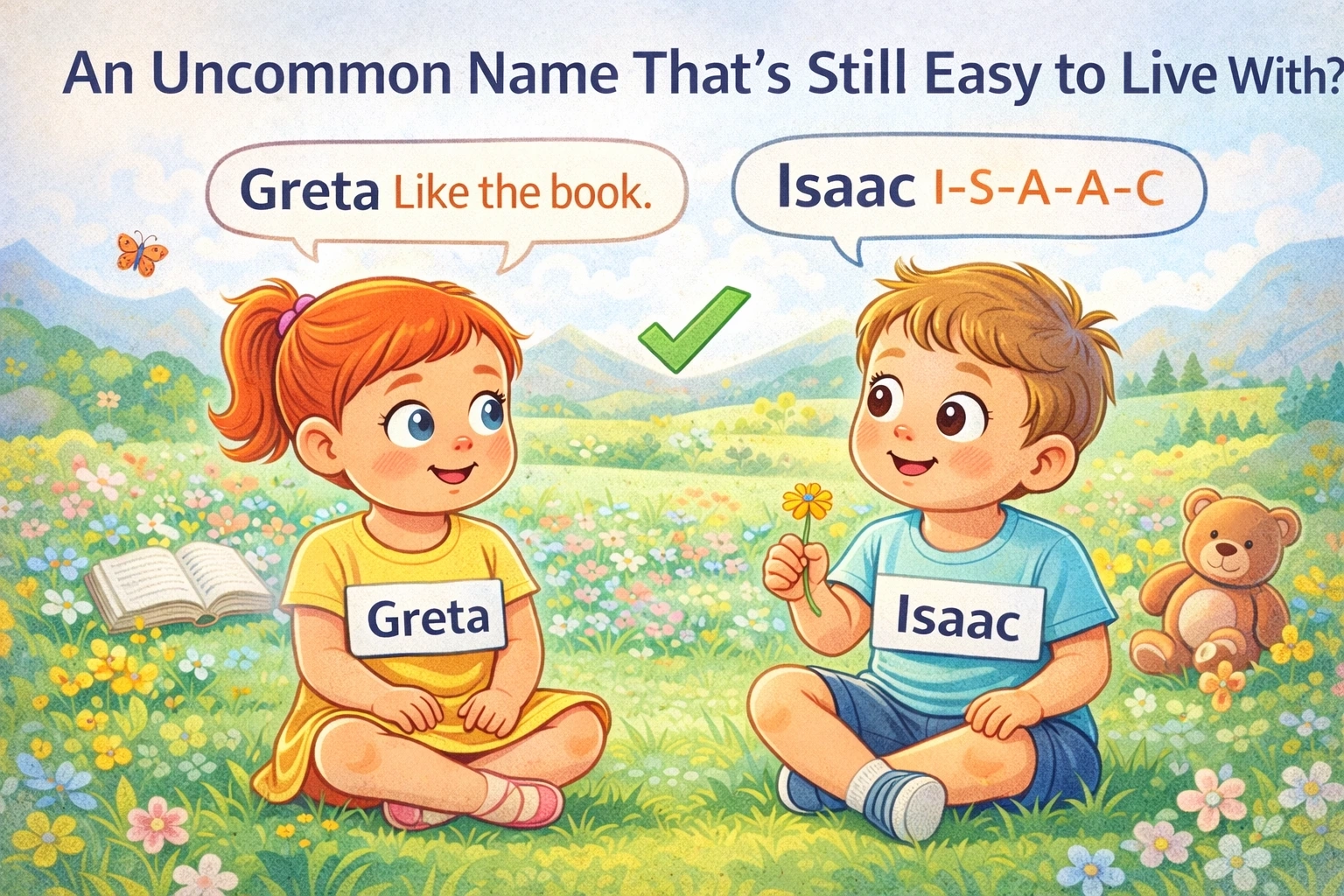
Many parents want the same thing, even if they describe it differently.
They do not want the most popular name in the country.But they also do not want a name that creates friction every week of their child’s life.
In other words, they are looking for a very specific middle ground:
uncommon, but usable
A name that feels fresh, but not forced.Distinct, but not difficult.Recognisable, but not crowded.
That balance is harder to find than it sounds. Some names are rare because they are genuinely underused and easy to wear. Others are rare for a reason: they are hard to spell, hard to say, or hard to carry in everyday Australian life.
This guide explains how to tell the difference.
1) What most parents actually mean by “uncommon”
When parents say they want an uncommon name, they usually do not mean:
- a name nobody has ever heard,
- a spelling nobody can guess,
- a name that needs a full explanation every time.
Usually, they mean something much simpler:
- not three in the same daycare room,
- not one of the most repeated names in school,
- not something that feels overexposed right now.
That is why the best uncommon names are not the rarest ones.They are the ones that avoid crowding without creating friction.
2) The real goal is not uniqueness — it is ease
Some parents chase uniqueness so hard that they end up with a name that is technically distinctive, but difficult in real life.
That can mean:
- constant spelling corrections,
- repeated mispronunciations,
- confusion over nicknames,
- a name that feels playful on paper but heavy in adult life.
This is where many naming mistakes happen.
A good uncommon name should still feel:
- easy to say,
- easy to hear,
- easy to spell,
- easy to imagine on both a child and an adult.
That is what makes a name easy to live with.
3) What makes a name easy to live with in Australia
Australian English shapes how names are heard and used.
A name may work beautifully in one linguistic setting and feel awkward in another. That does not make it a bad name — but it does mean usability matters.
In Australia, names are generally easier to live with when they are:
Clear on first hearing
If someone hears the name once, they can usually repeat it back correctly.
Reasonably intuitive to spell
Not necessarily “common”, but not full of surprises either.
Comfortable in Aussie speech rhythm
It should sound natural when said aloud in everyday conversation, not only in a formal announcement.
Flexible across life stages
It should work on a toddler, a teenager, and an adult without feeling like a costume.
4) The three main traps parents fall into
If you want a name that is uncommon but usable, these are the traps to avoid.
Trap 1 — “Rare spelling” instead of a genuinely less crowded name
Changing the spelling of a popular name often does not reduce real-world repetition. It just adds correction burden.
Trap 2 — A formal name that collapses into a crowded nickname
On paper, the name looks distinctive. In class, it becomes the same short form as everyone else’s.
Trap 3 — Choosing for aesthetic only
Some names look beautiful in a list or mood board but become tiring in daily speech.
A name has to survive real use, not just shortlist energy.
5) A better way to choose: use the “low-friction uncommon” test
Before you commit to a name, test it against five questions.
1. Is it uncommon by count — not just by rank?
A name outside the most crowded zone is usually safer than one with a trendy headline but hidden repetition.
2. Does it belong to a crowded sound family?
Even if the exact spelling is rare, the sound may still be everywhere.
3. What nickname will people actually use?
If the likely nickname is very common, the name may still feel crowded in practice.
4. Will people pronounce and spell it reasonably well?
Not perfectly, but well enough that your child is not correcting adults all the time.
5. Does it still feel solid at 35, not just sweet at 3?
A name should carry across life, not peak in the nursery.
If a name passes most of these tests, it is usually in a good zone.
6) What “good uncommon” usually looks like
The strongest uncommon names often share a few traits:
- they are familiar in shape, even if not overused,
- they do not rely on novelty spelling,
- they are distinct without sounding invented,
- they feel natural in speech,
- they do not collapse into an ultra-trendy nickname.
This is why some names feel refreshingly underused, while others feel like they are trying too hard.
The difference is usually not rarity.It is structure and usability.
7) What to do if you love a popular name style
You do not always need to abandon the style you love.
If you like the feel of a current trend, try moving sideways, not radically away from it.
That might mean:
- choosing a similar sound with lower crowding,
- using a related style that is less saturated,
- choosing a steadier classic instead of a fast riser,
- avoiding the most obvious nickname form.
This often works better than trying to “fix” a crowded name with unusual spelling.
8) A simple rule: make life easier for the child, not more interesting for the shortlist
A shortlist is temporary.A lived name is permanent.
That is why the best naming decisions usually favour:
- clarity over cleverness,
- usability over novelty,
- distinctiveness over performance.
A name does not need to impress strangers on first reading.It needs to work smoothly in the child’s real life.
That is a much better standard.
9) Quick checklist: is this name uncommon in the right way?
Before you decide, check these:
- It is not heavily crowded in current data.
- It does not rely on unusual spelling to feel distinctive.
- Its likely nickname is not significantly more common than the full name.
- Most Australians will pronounce it reasonably well on first try.
- It feels natural on both a child and an adult.
- I would still like this name even without the “rare” factor.
If you can tick most of those, you are probably close to the sweet spot.
FAQ
Is a rare name always better than a popular one?
No. A rare name can create more friction than a moderately popular name if it is difficult to say, spell or use.
How uncommon should a baby name be?
There is no perfect number. Most parents do best with a name that avoids the most crowded zone without becoming hard to live with.
Is unusual spelling a good way to make a name feel different?
Usually not. It often increases correction burden without reducing real-world repetition.
Can a name be uncommon but still feel classic?
Yes. Some names stay underused without feeling strange or trendy. That is often the strongest category.
Final thought
The best uncommon names are not the ones that make the boldest first impression.
They are the ones that feel quietly right — distinctive enough to avoid crowding, but easy enough to carry through everyday life.
If you are choosing between “popular” and “difficult”, remember that there is a better third option:
- uncommon, clear, and easy to live with