Baby Name Trends in Australia 2026: What Parents Are Choosing Now
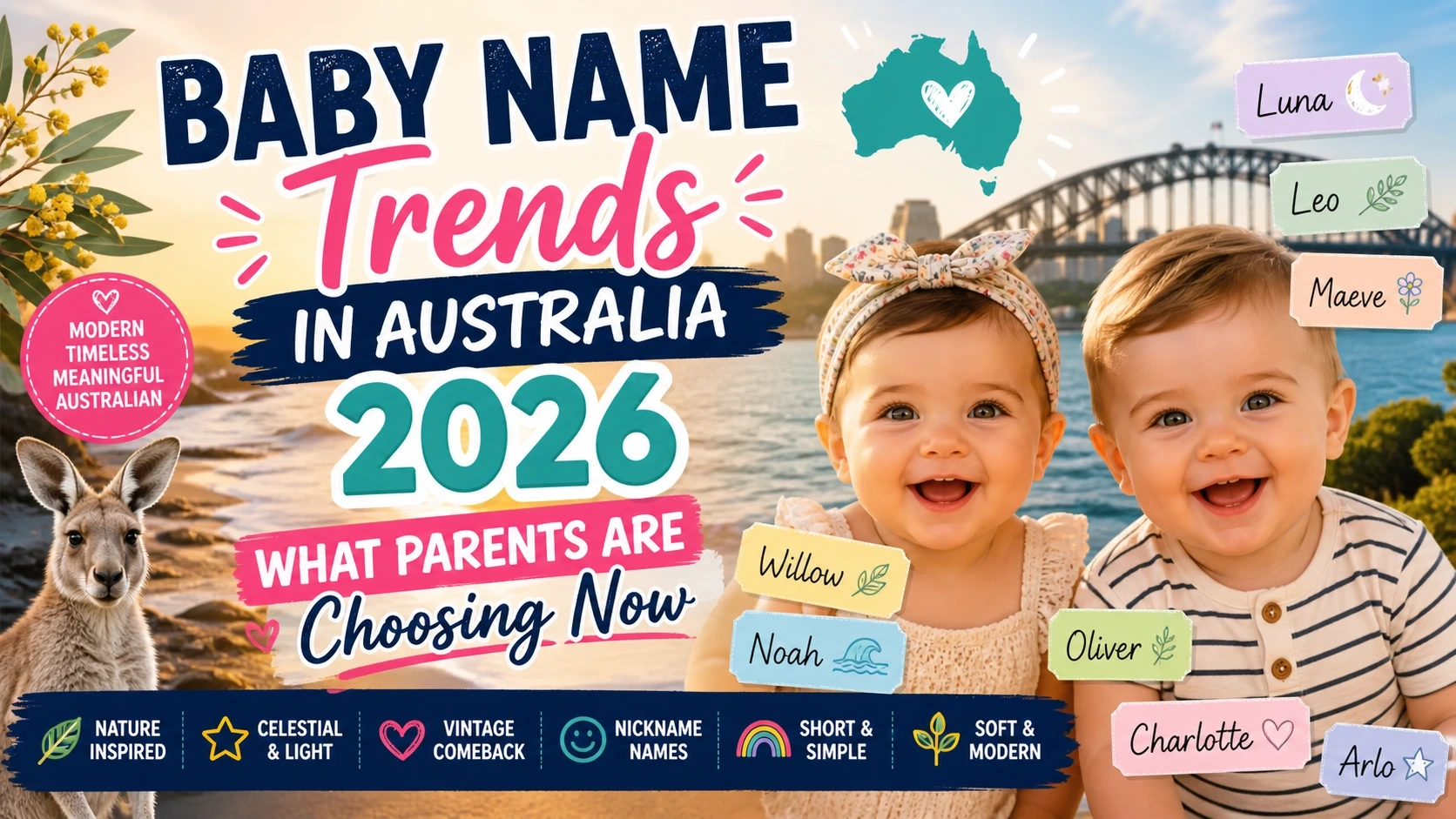
Choosing a baby name in Australia has become less about finding one single “perfect” name and more about finding the right feeling.
In 2026, Australian parents are still drawn to familiar favourites, but the mood around names is changing. Classic names remain strong, vintage names are coming back, nickname-style names feel more natural, and nature-inspired choices continue to fit the Australian lifestyle.
The latest national and state-level naming reports show that names such as Oliver, Charlotte, Amelia, Noah, Isla, Henry, Leo and Theodore remain highly influential in Australia. At the same time, newer trend lists point to rising interest in softer, nostalgic, celestial and nature-led names.
This guide explains the main baby name trends Australian parents are choosing in 2026 and why they matter.
Quick answer: what baby names are trending in Australia in 2026?
The biggest baby name trends in Australia in 2026 are:
- vintage names that feel warm rather than old-fashioned;
- nickname-style names used as full official names;
- nature names inspired by flowers, trees, birds, water and the Australian outdoors;
- soft boy names with gentle sounds;
- short names that are easy to spell and say;
- celestial and light-inspired names;
- familiar classics that still feel safe and stylish.
Names like Charlotte, Amelia, Isla, Oliver, Noah, Henry, Leo and Theodore continue to shape the mainstream Australian naming style, while names such as Luna, Maeve, Violet, Daisy, Rowan, Sage, Aurora, Elio and Frankie reflect broader 2026 naming directions.
1. Vintage names are coming back
Vintage names are one of the strongest baby name trends in Australia.
Parents are increasingly choosing names that feel familiar, gentle and full of character. These names often sound like they could belong to a grandparent, a storybook character or a classic Australian family photo.
Examples include:
- Dorothy
- Florence
- Hazel
- Violet
- Audrey
- Elsie
- Mabel
- Arthur
- Henry
- Theodore
- Harvey
- Walter
The appeal is clear. Vintage names feel established. They have history, but they are not necessarily boring. Many also work well with modern middle names and Australian surnames.
A name like Hazel feels soft and natural. Violet sits between floral and vintage. Henry feels traditional but still very usable. Theodore gives parents a formal name with friendly nickname options like Theo or Teddy.
For Australian parents in 2026, vintage does not mean outdated. It often means warm, grounded and distinctive.
2. Nickname-style names feel more natural
Another major trend is the rise of nickname-style names as official first names.
Instead of choosing a formal name and using a nickname every day, many parents now go straight to the shorter form.
Examples include:
This trend fits modern Australian naming habits well. Australian English already uses informal, friendly language in everyday life, so nickname-style names can feel natural rather than incomplete.
A name like Frankie can feel playful but still strong. Millie feels sweet and familiar. Archie is casual, warm and easy to remember.
The main thing parents should check is whether the name will still feel right in adulthood. Some nickname names age very well. Others may feel more childlike. That does not make them wrong, but it is worth considering.
3. Nature names still work strongly in Australia
Nature-inspired names continue to suit Australian families because they connect easily with local lifestyle, outdoor culture and the country’s strong relationship with landscape.
Popular nature-style names include:
- Willow
- Daisy
- Lily
- Violet
- Ivy
- River
- Ocean
- Forest
- Rowan
- Sage
- Juniper
- Meadow
- Fern
- Marigold
- Wren
Nature names can be soft, bold or gender-neutral. That makes them flexible.
Willow and Ivy feel gentle and botanical. River and Ocean feel more open and adventurous. Sage and Rowan work well for parents looking for names that do not feel strongly tied to one gender.
Several 2026 trend reports also highlight nature, botanical, earthy and light-filled names as rising styles, including names such as Sage, Juniper, Rowan, Ocean, Forest, Marigold and Meadow.
4. Celestial and light-inspired names are rising
Parents are also choosing names that feel bright, calm or cosmic.
This trend includes names connected with the moon, stars, sunlight, sky and glow.
Examples include:
- Luna
- Aurora
- Nova
- Soleil
- Solana
- Elio
- Halo
- Aurelia
- Stella
- Orion
- Leo
- Skye
These names work because they feel meaningful without always being religious or traditional. They give parents a sense of optimism and beauty.
Luna has already become familiar in many English-speaking countries. Aurora feels more dramatic and elegant. Nova is short, modern and energetic. Elio gives a softer alternative to more common boys’ names.
For Australia in 2026, this trend sits between modern naming and nature naming. It gives parents names that feel fresh but still easy to explain.
5. Short names are becoming stronger
Short baby names remain practical and stylish.
Australian parents often like names that are easy to spell, easy to pronounce and easy to use in everyday life. This is especially useful in multicultural families, where a name may need to work across different languages and accents.
Examples include:
- Leo
- Max
- Noah
- Finn
- Kai
- Arlo
- Mia
- Isla
- Ava
- Ivy
- Zoe
- Maeve
- Luca
- Remy
Short names often feel modern because they do not need much explanation. They are also strong on forms, school lists, sports teams and professional settings.
The only downside is popularity. Short names can rise quickly because they are so accessible. If parents want something brief but less common, they may prefer names like Nico, Romy, Otis, Mila, Nell or Etta.
6. Soft boy names are gaining ground
Boy names in Australia are becoming softer in sound.
This does not mean weak. It means parents are choosing names with gentle vowels, friendly endings and less aggressive sound patterns.
Examples include:
- Noah
- Leo
- Theo
- Arlo
- Eli
- Luca
- Milo
- Jude
- Finn
- Oscar
- Remy
- Ezra
These names feel warm and approachable. They often have open vowel sounds and are easy to say.
This trend also explains why names like Noah, Leo and Theodore continue to perform well. They are recognisable, but not harsh. They feel modern without being too experimental.
Soft boy names are especially useful for parents who want a name that feels emotionally intelligent, calm and current.
7. Elegant girl names are replacing overly flashy choices
For girls, many Australian parents are choosing elegant names that feel polished but not excessive.
Examples include:
- Charlotte
- Amelia
- Isla
- Matilda
- Grace
- Sophie
- Eleanor
- Florence
- Maeve
- Clara
- Alice
- Violet
These names are not plain, but they are not trying too hard. They feel balanced.
Charlotte remains one of the clearest examples of this style. It is classic, feminine and formal, but still easy to use. Amelia has a similar strength. Isla is shorter and softer, while Matilda has a distinctly Australian cultural resonance because of Waltzing Matilda.
The trend here is not just popularity. It is about tone. Parents are choosing names that feel graceful, stable and wearable.
8. Gender-neutral names are becoming more accepted
Gender-neutral names are now a normal part of the Australian baby name landscape.
Examples include:
- Riley
- Charlie
- Harper
- Rowan
- Sage
- Remy
- River
- Avery
- Quinn
- Billie
- Frankie
- Darcy
Some of these names lean more common for one gender in practice, but they still carry a flexible style.
This trend is useful for parents who want a name that feels modern, less restrictive or simply more relaxed. It also fits well with surnames that are strong, traditional or long, because a softer unisex first name can create balance.
9. Pop culture still matters, but parents are more careful
Pop culture continues to influence baby names, but Australian parents are usually cautious about names that feel too tied to one show, celebrity or viral trend.
Names can rise because of:
- streaming shows;
- musicians;
- sport;
- books;
- influencers;
- royal or celebrity babies;
- gaming and fantasy culture.
However, the strongest pop culture names usually have independent value. For example, Luna, Maeve, Aria, Nova and Theodore can be connected to cultural moments, but they also work as names outside those references.
That matters. A name that only makes sense because of one trend may feel dated quickly. A name that has history, sound appeal and cultural relevance is more likely to last.
10. Parents want familiar but not too common
One of the biggest tensions in Australian baby naming is this:
Parents want a name people recognise, but they do not want five children with the same name in the same classroom.
This is why names such as Oliver, Charlotte, Noah and Amelia remain powerful, but parents also keep searching for alternatives.
For example:
| If you like | You might also like |
| Oliver | Oscar, Otis, Arthur, Hugo |
| Charlotte | Clara, Violet, Florence, Alice |
| Noah | Theo, Leo, Ezra, Jude |
| Amelia | Emilia, Adeline, Matilda, Eliza |
| Isla | Ivy, Ayla, Elsie, Freya |
| Henry | Harvey, Louis, Edward, Theodore |
| Luna | Nova, Stella, Aurora, Lyra |
| Leo | Luca, Milo, Finn, Arlo |
This is where a name generator can help. Parents often know the style they like before they know the exact name.
What these trends mean for Australian parents
The main lesson from 2026 naming trends is that Australian parents are not choosing names randomly. They are choosing names with a clear emotional style.
The most popular styles are:
- warm rather than cold;
- familiar rather than strange;
- meaningful rather than complicated;
- short or nickname-friendly;
- soft in sound;
- easy to use in daily Australian life.
A good baby name in 2026 does not need to be rare. It needs to feel right, sound natural and age well.
Before choosing a name, parents should ask:
- Is it easy to say in Australia?
- Is it easy to spell?
- Does it work with the surname?
- Does it still feel suitable for an adult?
- Is it too closely tied to one trend?
- Does it have nickname options?
- Does the meaning matter to us?
- Would we still like it in ten years?
Best baby name styles to watch in Australia in 2026
Here is a simple summary of the strongest naming styles.
| Trend | Style | Example names |
| Vintage revival | Warm, classic, nostalgic | Florence, Hazel, Henry, Arthur |
| Nickname names | Friendly, casual, modern | Frankie, Millie, Archie, Billie |
| Nature names | Earthy, calm, outdoorsy | Willow, Sage, River, Daisy |
| Celestial names | Bright, hopeful, dreamy | Luna, Nova, Aurora, Elio |
| Soft boy names | Gentle, modern, approachable | Leo, Noah, Arlo, Theo |
| Elegant girl names | Polished, timeless, feminine | Charlotte, Amelia, Clara, Violet |
| Short names | Simple, clear, practical | Mia, Ivy, Max, Finn |
| Gender-neutral names | Flexible, current, relaxed | Rowan, Quinn, Remy, Charlie |
How to choose a baby name in 2026
Start with style, not with a list of random names.
For example, ask yourself:
- Do we want classic or modern?
- Do we want short or formal?
- Do we like nature names?
- Do we want a name with nickname options?
- Do we prefer popular names or uncommon names?
- Do we want something clearly Australian in feel?
- Do we need the name to work in another language?
Once you know the style, it becomes much easier to compare names.
For example, if you like vintage names, you might compare Florence, Violet, Hazel, Arthur, Henry and Theodore.
If you like nature names, you might compare Willow, River, Sage, Ivy, Daisy and Rowan.
If you like short names, you might compare Leo, Mia, Isla, Finn, Ivy, Max and Kai.
The best name is not always the rarest name. It is the name that fits your child, your family and your everyday life.
FAQ
What are the top baby name trends in Australia in 2026?
The main baby name trends in Australia in 2026 are vintage names, nickname-style names, nature names, celestial names, short names, soft boy names, elegant girl names and gender-neutral names.
What are popular girl names in Australia in 2026?
Popular and influential girl names include Charlotte, Amelia, Isla, Olivia, Mia, Hazel, Matilda, Grace, Lily, Violet, Ivy and Willow. These names reflect classic, elegant, floral and soft naming styles.
What are popular boy names in Australia in 2026?
Popular and influential boy names include Oliver, Noah, Henry, Leo, Theodore, William, Jack, Luca, Arthur and Oscar. Many of these names are classic, short or soft in sound.
Are vintage baby names popular in Australia?
Yes. Vintage names are popular because they feel familiar, warm and meaningful. Names such as Florence, Hazel, Violet, Arthur, Henry and Theodore fit this trend.
Are nature baby names popular in Australia?
Yes. Nature names work well in Australia because they connect with outdoor life, beaches, gardens and the natural landscape. Examples include Willow, River, Sage, Daisy, Ivy, Ocean, Rowan and Fern.
Are nickname names acceptable as official baby names?
Yes. Many Australian parents now use nickname-style names as official first names. Examples include Frankie, Millie, Archie, Billie, Evie, Charlie and Teddy.
What baby names are rising in 2026?
Names connected to vintage, nature, celestial and soft modern styles are likely to keep rising. Examples include Maeve, Luna, Nova, Aurora, Sage, Rowan, Violet, Elio, Arlo and Theo.
How do I find a baby name that is trendy but not too common?
Start by choosing a style, such as vintage, nature, short, classic or gender-neutral. Then compare names that fit that style. For example, if Oliver feels too common, you might consider Oscar, Otis, Arthur or Hugo.